

EU animal protein consumption to decline by 17% over the next 10 years
Meat consumption on the EU market is expected to drop over the next decade, according to an EC outlook presented at the end of 2019. At the same time, plant-based protein consumption is expected to grow by 469 grams per capita, with a higher share for vegetables and nuts products (+319 grams).
The impact on meat products is expected to be of 192 grams per capita, while fish and eggs will drop with 103 grams from the current level. The rest of 609 grams comes from dairy (see the chart below).
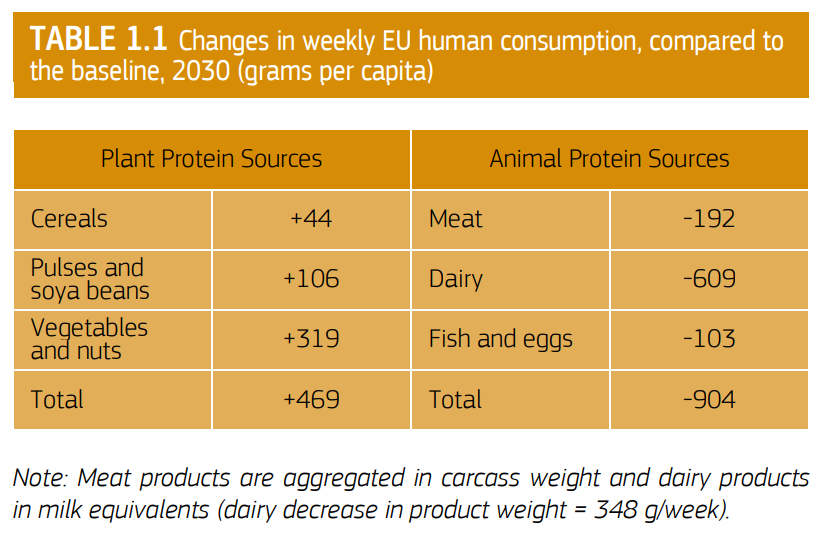
"Currently around 42% of the protein consumed in the EU comes from plants, with the remaining 58% coming from animals (meat, fish, eggs and dairy). In the scenario modelled by the European Commission, diets gradually change over the next ten years to a 50/50 ratio. Consumers continue to consume the same number of calories, protein and fats. This would lead to a 17% drop in animal protein consumption," commented Rebecca Oborne, Analyst - Red Meat, AHDB.
As for the environmental impact of the changes foreseen by the European Commission, the EU’s carbon footprint would reduce by 6% (22 million t CO2 eq) in 2030 compared to the baseline. However non-EU countries would also record a decline in greenhouse gas emissions of 33 million tonnes CO2 eq. This is because the EU would be putting more meat and dairy on the global market, increasing its global market share.
The transformation of the market is going to have implications for the current animal production model as well. "In the scenario, it is assumed that meat and dairy demand outside of the EU remains at the baseline forecast. This means the production of meat and dairy would relocate from countries where GHG emissions per unit of production are higher, to the EU where they are lower. The EU has a more productive livestock system, which is less carbon-intensive than some other countries," added Mrs. Oborne.
Friland ensures progress and increases revenue in the first half of 2025/26, which has otherwise ...

The National Feedlot Survey has confirmed a new record turn-off from Australian feedlots of over ...
As part of the measures to combat African swine fever (ASF) in wild boar populations, new restric...